
Ever wondered who actually teaches AI to “think”? Like, someone has to tell ChatGPT what makes sense and what doesn’t, right? And no, it’s not always rocket scientists in labs — sometimes it’s everyday people helping AI get smarter.
I’ve been following AI job trends since 2024, and as a freelance professional and occasional CPA, I research online income opportunities to help beginners know what to expect and how to start safely.
So, if you’re curious about AI training jobs, how they work, and why people are getting paid to do them, this guide is for you — and later on we’ll walk you through the exact steps for beginners in our detailed guide on how to start AI training jobs without any experience.
What AI Training Jobs Are
Simply put, AI training jobs involve helping artificial intelligence systems learn from human input.
AI needs vast amounts of structured data to function properly. But raw data can be messy or confusing. That’s where humans come in.
People in these roles perform tasks like:
- Labeling or categorizing data (images, text, audio)
- Reviewing AI-generated responses
- Rating search results or recommendations
- Annotating complex data for context
- Correcting AI mistakes to improve accuracy
Think of it as tutoring a robot. It’s fast, smart, and sometimes stubborn — but it still needs guidance.
Why AI Training Jobs Are Growing Fast
AI is everywhere now, from chatbots to recommendation engines. But even the smartest AI can’t function without human guidance.
AI Models Need Human Feedback
AI struggles with context, tone, and accuracy. Human trainers provide feedback that helps models:
- Understand what’s correct
- Recognize patterns
- Make better predictions
Companies Rely on Human-Labeled Data
Without high-quality labeled data, AI can’t learn effectively. Humans are essential for:
- Correcting errors
- Tagging datasets
- Ensuring AI outputs are useful
Remote and Beginner-Friendly
Many AI training tasks are remote and don’t require coding skills. That makes them accessible to beginners who just want to get started with AI work. If you want a full beginner roadmap, check out our post on how to start AI training jobs without any experience.
Types of AI Training Job Opportunities
There’s more than one way to help train AI. Here are the main types beginners encounter.
Data Labeling Jobs
Data labeling is all about tagging or categorizing raw data so AI systems know what’s what.
Tasks might include:
- Labeling images (dogs, cats, cars)
- Tagging audio clips or transcripts
- Categorizing text datasets for chatbots
These jobs teach AI pattern recognition.
Data Annotation Jobs
Data annotation is similar to labeling but more detailed.
You might:
- Highlight objects in an image
- Annotate emotions in a conversation
- Mark relationships in text or diagrams
Annotation helps AI understand complex patterns and context.
AI Evaluation / Rating Jobs
Some jobs focus on evaluating AI outputs rather than labeling data.
Examples include:
- Rating search engine results
- Reviewing chatbot or AI-generated answers
- Scoring recommendation systems for accuracy
Your feedback helps AI systems improve and make more relevant predictions.
Skills Needed for AI Training Jobs
The good news: you don’t need a tech degree. But a few core skills make a big difference:
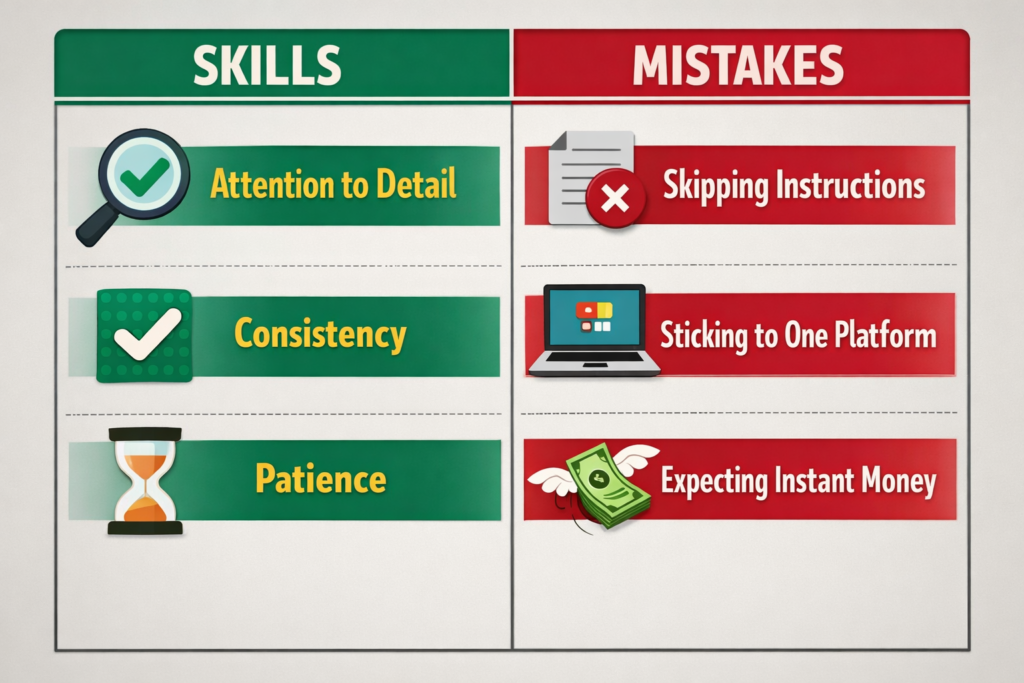
- Attention to detail – Small mistakes can affect AI learning.
- Consistency – Repeat similar tasks accurately.
- Reading comprehension – Follow task guidelines carefully.
- Basic computer literacy – Navigate online dashboards easily.
If you can handle these, you’re already set to start.
Platforms & Tools to Start
Several platforms hire beginners for AI training tasks. Some of the most popular include:
- Appen – Data labeling and evaluation tasks
- TELUS International AI – AI rating and evaluation work
- Clickworker – Microtasks and data processing
- iMerit – Data annotation and labeling projects
- Remotasks – Annotation and labeling with optional training
Pro tip: create accounts on multiple platforms to maximize your chances of finding consistent work. More details on onboarding and qualification tests are covered in our step-by-step guide: how to start AI training jobs without any experience.
How Much You Can Earn
Pay depends on task complexity, platform, and your accuracy. Typical ranges include:
- $5–$12 per hour – Entry-level labeling or microtasks
- $12–$20 per hour – Evaluation and rating roles
- Higher pay – Long-term or specialized projects
Many of these roles are freelance or contract-based, so availability may fluctuate. If you want a realistic beginner earning roadmap, check out our related post on how to start AI training jobs without any experience.
Step-by-Step Guide to Getting Started
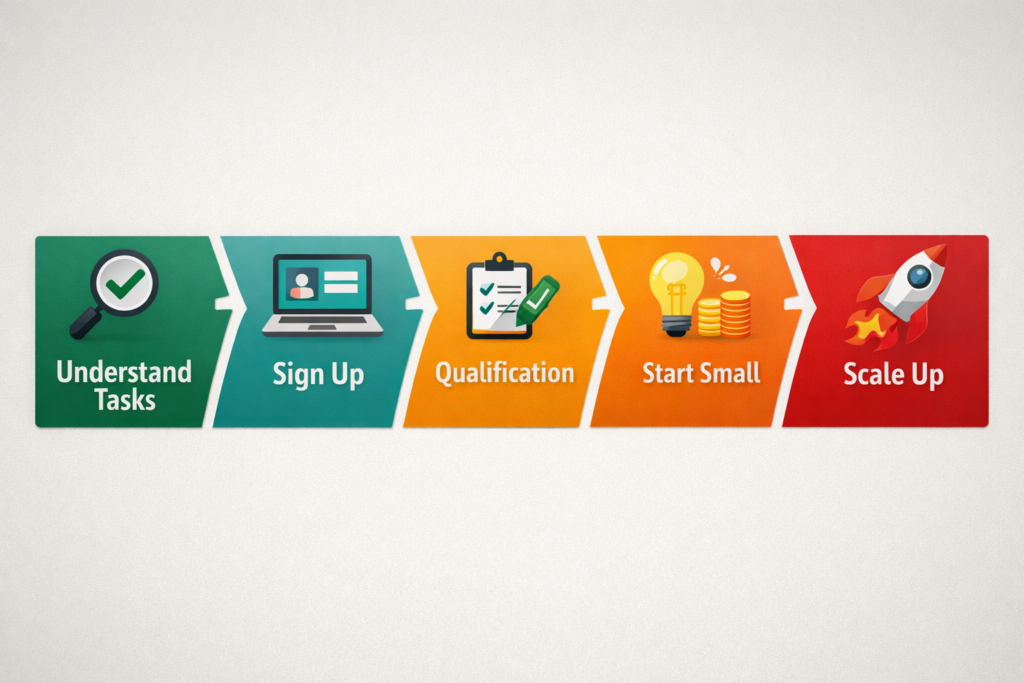
Here’s a simple roadmap for beginners:
Step 1: Learn the Basics
Understand the types of AI training roles — labeling, annotation, or evaluation.
Step 2: Sign Up on Platforms
Register on multiple sites like Appen, Remotasks, or iMerit.
Step 3: Complete Qualification Tests
Platforms usually require short tests to ensure accuracy and attention to detail.
Step 4: Start With Small Tasks
Begin with microtasks to get approved and build your accuracy scores.
Step 5: Track Accuracy & Reputation
High accuracy scores unlock bigger and better-paying projects.
For a full beginner roadmap with detailed steps and platform advice, go to the how to start AI training jobs without any experience guide.
Common Beginner Mistakes
Ignoring Guidelines
Skipping instructions can hurt your score and reduce future opportunities.
Relying on a Single Platform
Availability varies. Using multiple platforms increases chances for consistent work.
Expecting Instant Income
It can take days or weeks to start seeing projects and payments. Patience pays off.
FAQs About AI Training Jobs
1. Are AI training jobs legit?
Yes. Many reputable companies hire remote workers to help train AI systems. Always research platforms before applying.
2. Do I need coding skills?
No. Most beginner roles involve labeling, annotation, or evaluation, not programming.
3. Can beginners really get these jobs?
Absolutely. As long as you follow instructions and pass basic tests, beginners can get started.
4. Are these jobs remote?
Yes, most AI training jobs can be done fully online from home.
5. How long does it take to get my first project?
It depends on the platform, but some workers get tasks within days; others might wait a couple of weeks.
Reader Next Step
If you’re ready to take the next step, check out our in-depth guide on how to start AI training jobs without any experience.
You’ll find a step‑by‑step plan for beginners, platform signup tips, test prep advice, and more ways to start earning without coding.
Conclusion / Key Takeaways
AI training jobs let beginners participate in the AI revolution without needing programming skills.
They involve tasks like:
- Data labeling
- Data annotation
- Evaluation of AI outputs
To get started, focus on learning the tasks, signing up on platforms, and building accuracy over time. Even small steps now can lead to consistent online income and open doors to more advanced AI work in the future.
Remember — every AI you interact with learned from human guidance at some point. Why not be one of those humans? 😄