

Thinking about making money while helping AI get smarter? 😏 Sounds like sci-fi, but it’s real. You don’t need coding skills, a tech degree, or years of experience — just some patience and attention to detail.
I’ve been following AI job trends since 2024, and as a freelance professional and accountant, I research online income opportunities to help beginners understand what to expect and how to start safely.
In this blog post, I will introduce you to a low-hanging fruit in the AI world today. Step-by-step, we will walk through how to start AI Training Jobs Without Any Experience! Yes, you read it right, WITHOUT ANY EXPERIENCE. So you’d better stop what you are watching now and take notes as we gather important information.
What Are AI Training Jobs, Anyway?
AI training jobs are roles where humans help AI learn and improve. Think of it as teaching a really smart robot that still can’t tell the difference between a cat and a dog without guidance.
Beginners usually handle:
- Data labeling – tagging images, audio, or text
- Data annotation – adding context or details to datasets
- AI evaluation – reviewing outputs and rating accuracy
If you missed it, our previous post What Are AI Training Jobs? Beginner-Friendly Guide explains this in detail, so it’s worth a read before diving in.
Why These Jobs Are Perfect for Beginners
You might think AI sounds intimidating — but guess what? Beginners are welcome.
- No coding needed – Most tasks are about labeling or reviewing, not programming.
- Remote-friendly – Work from home, coffee shop, or wherever you have Wi-Fi.
- Flexible hours – Pick tasks when you’re free.
Companies are looking for reliable, detail-oriented humans to teach AI systems, which makes this a great entry point for remote work.
Step-by-Step Guide to Starting
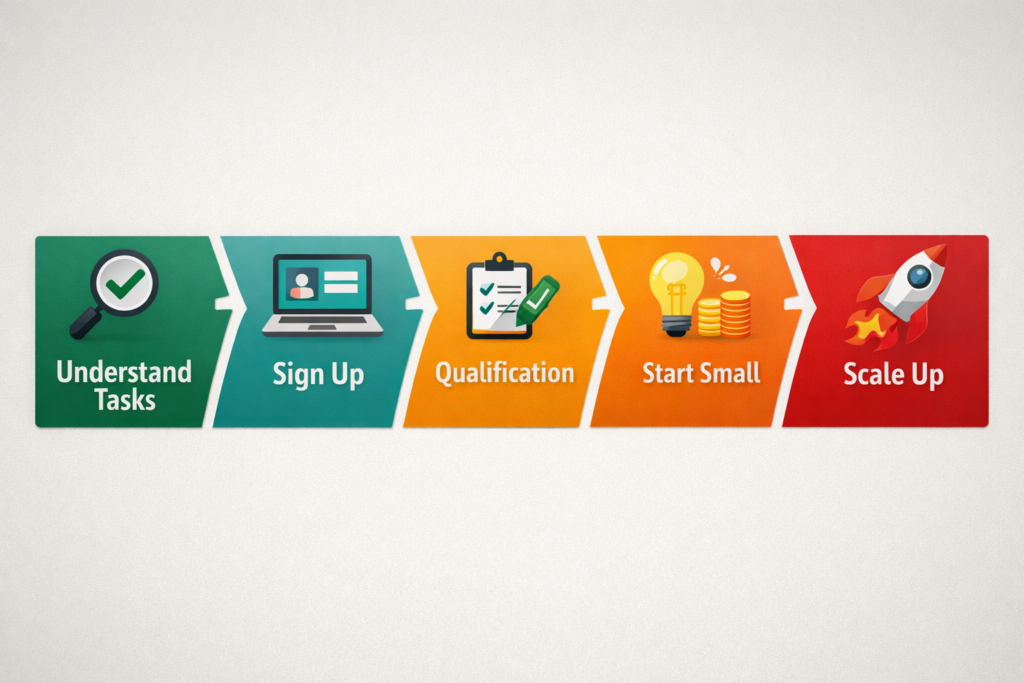
Here’s how to get started as a beginner in 2026:
Step 1: Understand the Types of Tasks
Know the difference between labeling, annotation, and evaluation. This helps you pick tasks that suit your skills.
- Labeling = basic tags for images/text/audio
- Annotation = more detailed tagging
- Evaluation = reviewing outputs for quality
(For more on these roles, see our beginner guide to AI training jobs.)
Step 2: Sign Up on Multiple Platforms
The most popular platforms for beginners include:
- Appen – Microtasks, labeling, evaluation
- Remotasks – Annotation and labeling with training
- iMerit – Data labeling for AI projects
- TELUS International AI – Rating and evaluation jobs
Pro tip: create accounts on several platforms to maximize your chances of consistent tasks.
Step 3: Complete Qualification Tests
Most platforms require a short test to check your accuracy.
- Read instructions carefully
- Take your time — errors can hurt approval
- Focus on consistency
High scores mean more opportunities and better-paying projects.
Step 4: Start Small, Track Accuracy
Begin with simple microtasks. Accuracy is key. Mistakes don’t just affect your score — they affect the AI too.
- Track completed tasks
- Note patterns in instructions
- Improve with feedback
Step 5: Scale Up Gradually
Once you’re comfortable and accurate, take on higher-paying or more complex tasks. Over time, this can turn into a consistent freelance income.
Skills That Help You Succeed
Even without coding, these skills make life easier:
- Attention to detail – Small errors matter
- Consistency – Repeatable quality work is valued
- Basic computer literacy – Comfortable with online platforms
- Patience – Some tasks take time to understand
Common Mistakes Beginners Make
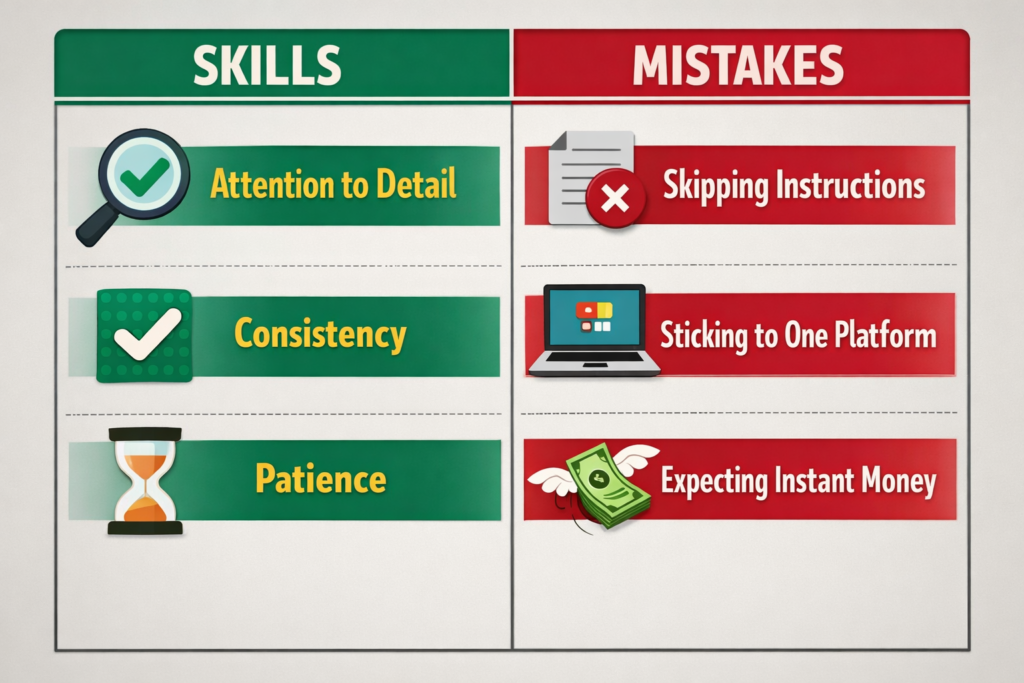
- Skipping instructions – Always read task guidelines.
- Sticking to one platform – Diversify to ensure consistent work.
- Expecting instant money – Projects and payouts may take time.
How Much Can Beginners Earn?
Pay varies depending on task type and platform:
- $5–$12/hour – Simple data labeling tasks
- $12–$20/hour – Evaluation or more detailed annotation
- Higher rates – Specialized or long-term projects
Consistency and accuracy can help unlock premium tasks and better pay over time.
FAQs About Starting AI Training Jobs
1. Do I need experience to get started?
Nope! Beginners are welcome as long as you follow instructions and pass platform tests.
2. Are these jobs remote?
Yes. Most AI training tasks can be done from anywhere with an internet connection.
3. How long does it take to get my first project?
It depends on the platform. Some assign tasks within a few days; others may take a week or two.
4. Can I do multiple platforms at once?
Yes. Signing up for several platforms increases your chances of consistent work.
5. Do I need coding skills?
No. These roles are beginner-friendly and focus on labeling, annotation, and evaluation.
Reader Next Step
Ready to actually start your first AI training job? Check out our detailed, step-by-step guide here: How to land your first AI training job.
It covers:
- Platform signups
- Qualification test tips
- Best task types for beginners
- Ways to increase pay over time
Conclusion / Key Takeaways
AI training jobs are perfect for beginners who want remote, flexible work without coding.
Key points to remember:
- Start with understanding tasks: labeling, annotation, evaluation
- Sign up on multiple platforms to maximize opportunities
- Track accuracy and consistency
- Use beginner guides (like our linked posts) to avoid mistakes
Take note: AI needs humans to learn. You could be the one guiding the next generation of smart machines.